
As an Amazon Associate I earn from qualifying purchases.
Updated November 2026
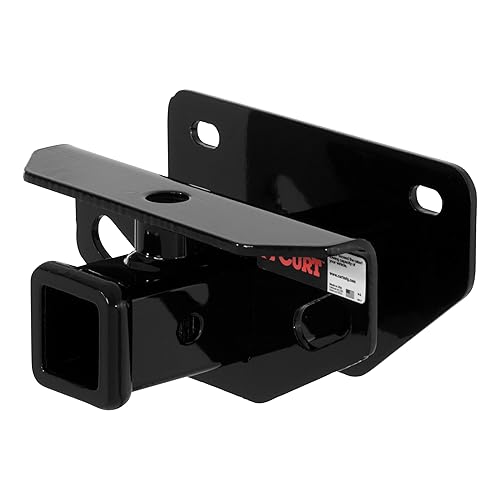
A class 111 trailer hitch is a light-duty receiver rated for relatively small loads, typically used for small trailers, utility carriers and cargo carriers. This guide explains what the class means, how to confirm a class 111 trailer hitch fits your tow vehicle and trailer, and how to inspect and install it so you tow safely.
What Class 111 Means
Trailer hitches are rated in classes from I to V, with higher numbers handling heavier loads. Class I and II hitches are generally for light work and small trailers, and the class 111 designation is a common shorthand you will see for receiver-style hitches built for light-duty towing. Manufacturers specify a maximum gross trailer weight (GTW) and a maximum tongue weight (TW) for each hitch, and these limits are the numbers that matter most. Never rely on the class name alone. Always read the rating label stamped or printed on the hitch itself and in the product manual.
Shopping for one? See our guide: 6 Best Class IV Trailer Hitch Options for Safe Towing (2026).
The two ratings work together. Gross trailer weight is the total loaded weight of the trailer. Tongue weight is the downward force the coupler places on the hitch, usually about 10 to 15 percent of GTW for conventional trailers. If either figure exceeds the hitch rating, the hitch is overloaded, even if the other number is fine.
Check Compatibility Before You Buy
Start by confirming your tow vehicle’s own towing capacity in the owner’s manual. The hitch cannot safely exceed the vehicle’s rating, and the lowest rating in the chain sets the limit. Next, weigh your loaded trailer, or use the trailer’s listed GVWR as a worst-case figure. Then compare those numbers to the hitch rating.
- Vehicle towing capacity from the owner’s manual
- Loaded trailer weight (gross trailer weight)
- Tongue weight at 10 to 15 percent of gross trailer weight
- Receiver tube size, usually 1-1/4 inch or 2 inch
- Hitch rating label for both GTW and TW
Also match the receiver opening to your ball mount shank and check that your vehicle’s mounting points are rated for the load. If you are unsure, a dealer or certified installer can confirm fit. For a fuller comparison of ball mounts, see Trailer Hitch Ball Mount Compared: 6 Best Picks for 2026.
Installation Steps
Installation varies by vehicle, but the general process is consistent. Work on a level surface with the parking brake set and the vehicle in park or in gear.
- Clean the mounting points and remove any dirt or rust from the frame contact areas.
- Align the hitch with the mounting holes and start all fasteners by hand.
- Tighten the bolts to the torque value the manufacturer specifies, using a torque wrench.
- Insert the ball mount and secure it with a pin and clip.
- Test the fit by hand and check for any play or wobble.
Use the torque specification printed in the manual rather than estimating by feel. Undertightened bolts can loosen on the road, and overtightened bolts can strip threads or crack the frame.
Pre-Trip Safety Checks
Before every trip, inspect the hitch and its connections. Look for cracks in welds, bent tubing, rust that has eaten into metal, and loose hardware. Confirm the ball and coupler are the correct size and that the coupler latches fully over the ball. Attach the safety chains in a crossed pattern under the tongue so they can cradle the tongue if it separates. Test your trailer lights, and check tire pressure on both the tow vehicle and trailer.
For more on hitch security, see 6 Best Trailer Hitch Locks: Top Picks Compared for 2026 and 7 Best Trailer Hitch Pins: Top Picks Compared for Safe Towing (2026).
Common Mistakes
- Ignoring the tongue weight and only checking gross trailer weight.
- Assuming a class name guarantees a rating without reading the label.
- Exceeding the tow vehicle’s capacity because the hitch looks strong enough.
- Skipping the torque specification during installation.
- Failing to re-check bolts after the first few miles of towing.
- Towing with worn or unpinned ball mounts.
Tips for Safer Towing
Keep a written record of your trailer’s loaded weight and tongue weight, and update it whenever your cargo changes. Re-check hardware every few trips and after any rough road. If your load is near the hitch limit, consider upgrading to a higher-rated receiver rather than running at the edge of its capacity. Heavier loads also benefit from a properly set-up weight distribution system, which is covered in Weight Distribution Hitch Setup: A Step-by-Step Guide for Safe Towing.
Recommended gear
- Torque wrench lets you tighten hitch bolts to the manufacturer’s specification, which helps prevent loosening on the road. View on Amazon
- Hitch pin and clip set secures the ball mount in the receiver so it cannot slide out under load. View on Amazon
- Digital trailer scale helps you check gross trailer weight and tongue weight before you tow. View on Amazon
FAQ
Is a class 111 trailer hitch the same as a class 3 hitch?
No. Class designations vary in how they are described and used, so do not assume two hitches with similar names share the same rating. Check the weight limits printed on each hitch and compare them to your load.
How do I find my tongue weight?
You can measure it with a tongue weight scale or a bathroom scale under a receiver-style setup. Most conventional trailers land around 10 to 15 percent of gross trailer weight, but measuring is more accurate.
Can I tow a heavy trailer with a light-duty hitch?
Only if the hitch rating, the tow vehicle rating and the loaded trailer weight all fall within safe limits. Exceeding any single rating makes the setup unsafe.
How often should I inspect my hitch?
Inspect it before each trip and perform a more thorough check at least once a season. Look for cracks, rust, loose bolts and worn pins.
Should I have a professional install my hitch?
If you are not comfortable with torque specs, frame mounting or wiring, consult a professional installer. Incorrect installation can cause serious accidents.
Conclusion
A class 111 trailer hitch can serve light towing well when it matches your vehicle and load. Read the rating labels, check gross trailer and tongue weight, and install with the correct torque. Run a short inspection before every trip, and when in doubt, consult a professional.